THE TEACHING CONNECTION
Provides building blocks for NAD and NADP, which participate in cellular energy reactions.
What it does
Provides building blocks for NAD and NADP, which participate in cellular energy reactions.
Possible deficiency symptoms
Severe deficiency causes pellagra, which can involve skin, digestive and neurological symptoms.
How supplementation is approached
Identify whether the product contains nicotinic acid, niacinamide or another form before discussing B3. Dr. Purser’s course specifically prepares patients for flushing with niacin; those forms should not be treated as interchangeable therapies.
Food sources
Poultry; fish; meat; peanuts; enriched grains.
Supplement forms
Nicotinic acid and nicotinamide (niacinamide).
What to track and reassess
Note any flushing and the exact form of niacin you use. Higher-dose treatment for blood fats needs different follow-up from ordinary nutrient replenishment, including attention to liver and blood sugar results.
From starting support to follow-up
If you and your clinician start a CMA replenishment plan, you may add one new product at a time, often waiting 3–7 days to see how you feel. A check-in is usually planned near ten weeks during an approximately 100-day period. Follow your written plan for amounts and timing. At follow-up, you may continue, change, or stop each item. This timetable does not automatically end longer-term support.
Names you may see
Vitamin B3 (Niacin) · Niacin
EXPLORE WITH YOUR CARE TEAM
Supplements to explore
Compare the products below, including their ingredients and available forms. Your care team can help you choose one or more options for your needs.
SUPPLEMENT OPTIONS
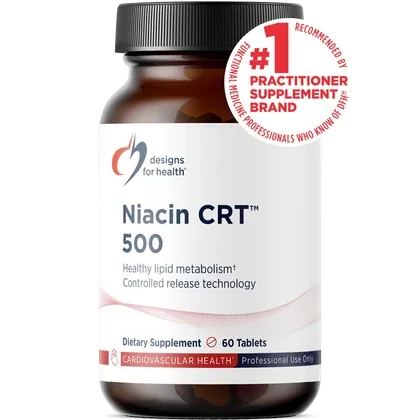
Niacin CRT
Compare supplement options related to Vitamin B3.
Different products offer different forms and amounts. Compare the labels with your clinician to find what fits your needs.
Tell your care team which supplements and medicines you already take. Check the product page for current ingredients, prices, and availability.