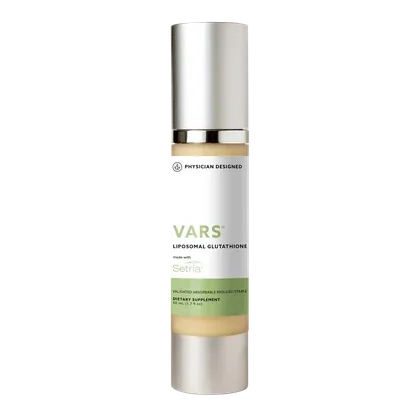
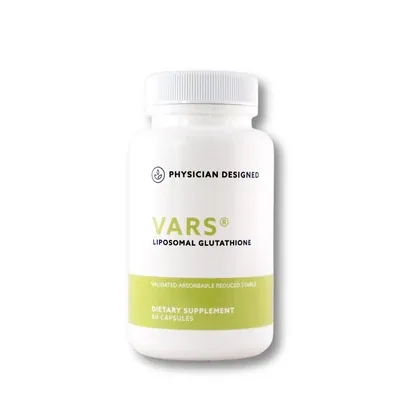
Someone needs to hear the real talk on glutathione cuz all these people are coming out with other forms of it. It's just why we're getting back to just very basics of glutathione. There may be some people here this is the first time that they've ever even heard of glutathione. Yeah. So I I do want to just mention a couple of those things.
Glutathione is the master antioxidant in our bodies. It is it's 2 million molecule to molecule 2 million times more aggressive, more grabby, more potent than vitamin C for example. 2 million times, meaning it'll go after an an
oxidant or a toxin or something 2 million times more aggressively than vitamin C will. It's an antioxidant that exists in almost every cell of your body as well as floating. You should you're in deep trouble. Yeah. Right along the the electron transport chain in the mitochondria.
Glutathione is one of the critical antioxidants for helping protect against the oxidative stress and damage that comes just from cellular respiration. That's right. Yeah. It's so using fancy words again. I can't follow the the number one symptom you're going to get with low glutathon is brain fog.
Yeah. Weirdly enough, they say it's not supposed to pass bloodb brain barrier. They're wrong. They're wrong on so many things. We know all this now from our work with it, our biotech work, our patent work. If our bodies are already making this and if it's so critical, why why do we
need it as a supple? Why do we sell it? Yeah. Because as we get older, we quit making enough of it. Because we get vitamin defic deficiencies or amino acid deficiencies like glutamine, stuff like that that prevents us or serarene or whatever that prevents us from making the glutathione. It's really just a
tripeptide. It's three amino acids bonded together and the and one of them has a sulfide group on it that that's the sticky part, the smelly part. That's the super molecular sticky part. It's the stickiest substance literally in your body. because they can grab
anything, metals, viruses, anything with that. So, white blood cells use it and grab things with it. They use it like a spear to grab whatever with it. So, this a white blood cell, this is the glutathione, the yellow thing, and it's going around floating around grabbing things that shouldn't be in your body.
And then the white blood cell takes to your kidneys or your liver or your your bowels, and out it goes. Yeah. So, that's how it works. Exactly. But you want it to work aggressively. You need it fresh. You need it reduced. A lot of people genetically have oxidation problems.
EXPLORE WITH YOUR CARE TEAM
Supplements to explore
Compare the products below, including their ingredients and available forms. Your care team can help you choose one or more options for your needs.
SUPPLEMENT OPTIONS
Glutathione supplement options
Compare supplement options related to Glutathione.
Different products offer different forms and amounts. Compare the labels with your clinician to find what fits your needs.
GSTO2 encodes glutathione S-transferase omega 2, a redox enzyme with dehydroascorbate reductase activity that connects glutathione chemistry with vitamin C recycling. It is a separate gene from GSTO1.
IL4 encodes interleukin-4, a cytokine involved in Th2 immune responses and antibody class switching, including pathways related to IgE. It operates alongside IL-5 and IL-13 rather than representing all allergic biology by itself.