THE TEACHING CONNECTION
Three tests, three different questions
Three tests, three different questions
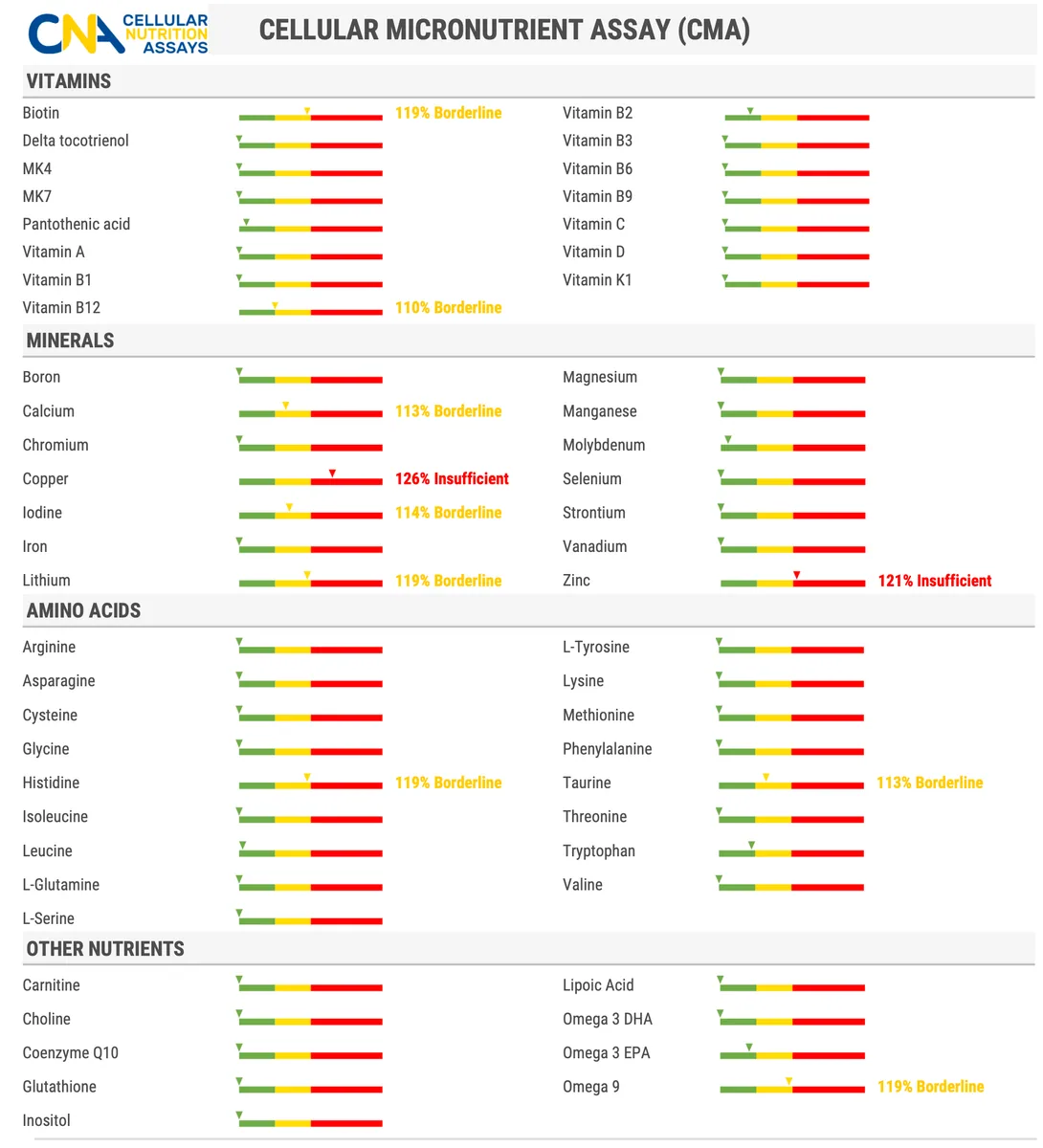
Dr. Purser teaches genetics as a map of inherited tendencies, CMA as a laboratory-specific assessment of current nutrient-related cellular responses, and conventional blood testing as a separate source of biochemical and medical information. An APA/redox result adds another layer. None should be silently substituted for another.
Putting the pieces together
A useful discussion compares the exact genetic finding, your current nutrient results, symptoms, and a clear health goal. Ask what else could explain the result. A normal blood test does not answer every question, and a CMA finding does not override a medical safety concern.
A question to bring to your visit
Which conclusions come from genetics, which come from current measurements, and what evidence would change the plan?
Reading your own results
Bring your original report, current results, health history, and medicines to your visit. This information can help you ask questions, but it cannot diagnose a condition or choose a supplement dose for you.