Genetic variants / SNP findings — lab reference
Some search terms matchedClassify by evidence, zygosity, phenotype, and clinical actionability rather than a numeric range.
THE PURSER WELLNESS ENCYCLOPEDIA
4 chapters, at your pace
452 resources for your curiosity16 matching listings grouped; alternative sources stay available.
What’s searchable?Classify by evidence, zygosity, phenotype, and clinical actionability rather than a numeric range.
CETP transfers cholesteryl esters between lipoprotein particles. This helps explain why the balance of HDL and other lipid particles is more complex than a single cholesterol number.
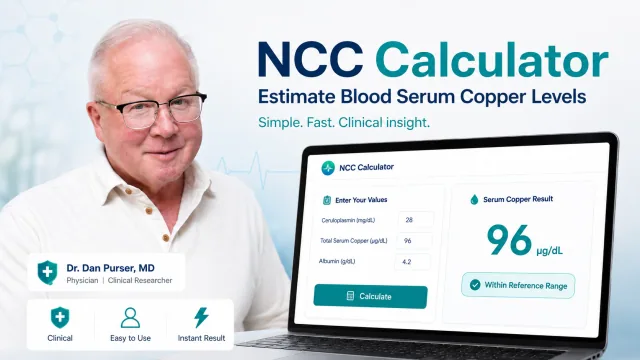
This is the BEST way to look at what your Copper is really doing. Is it getting into the cells, or building up in other places? Let’s see! Non-Ceruloplasmin Copper Calculator Calculate NCC in Seconds Enter zinc, copper, and ceruloplasmin exactly as they appear on a lab report. The calculator converts units, calculates the copper:zinc ratio, and highlights the percent of non-ceruloplasmin-bound copper. Lab Inputs Use the unit dropdowns to match the lab report. The app normalizes everything to µg/dL before calculating. Zinc Required for copper:zinc ratio Total Copper Required for all NCC calcula
…ally autistic or well into the spectrum, have ADHD, who are nonverbal, who are uh in frustrated and in pain a lot. You can tell they pound their heads, their foreheads, they slap their legs, they self stem. You can see they want to talk. I …
Searchable captionsRead matching passage…re, what we got planned, bigger things coming, what are available, new tests, new books, all that that's coming out. Um so anytime we're ready, tell me when we're ready. Jackson, hit all the u when we're on all these sites. Yep. Okay. Looks…
Searchable captionsRead matching passageHomocysteine rarely gets the attention of cholesterol, blood sugar, or blood pressure. It should. When homocysteine becomes elevated, it has been associated with cardiovascular disease, stroke, cognitive decline, blood clots, and other he
Could an overlooked lab marker be providing valuable insight into your health? Understanding your homocysteine level may help you and your healthcare provider identify opportunities to support cardiovascular health, healthy methylation, an
What if one overlooked lab marker is telling you more about your health than you realize? Most people have never heard of homocysteine. Yet when homocysteine levels are elevated, it may signal that critical pathways involving methylation,
👋 Ever stared at your lab results and thought, “What am I even looking at here?” We hear that all the time with our CMA with Redox testing. Patients get TWO pages of results, and without a clear explanation it can feel overwhelming. In th
What if the real threat to your heart isn’t cholesterol at all? For decades, cholesterol has taken the blame. But what if we’ve been focusing on the wrong marker while something far more dangerous goes unchecked? Homocysteine doesn’t get
🚨 High homocysteine isn’t just a lab number—it’s a warning sign. Genes like MTHFR, MTR, MTRR, and GGH can overactivate the methylation cycle and lead to hyperhomocysteinemia, which drives inflammation, stroke risk, and even kidney failure.
Search looks for your words in titles, descriptions, available articles, learning guides, and video captions when available. The closest matches appear first. Duplicate posts are grouped, with links to other places you can read or watch them. Books, chapters, and reports have topic guides here; the original files and full book text are not available in this encyclopedia. Subscriber posts include a title and public summary; open Substack to read the full post.